
Edited volume · Published digitally 2026 · Print October 2026
Complete citation
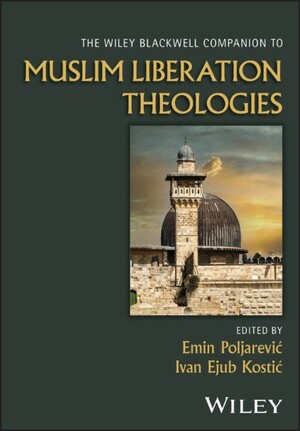
Poljarević, Emin, and Ivan Ejub Kostić, eds. The Wiley Blackwell Companion to Muslim Liberation Theologies. Wiley Blackwell, 2026.
Publication status and type
Edited academic volume; digital edition published in 2026; print edition scheduled for October 2026.
Overview
This companion brings together scholarship on Muslim liberation theologies as historically situated, ethically grounded approaches to questions of justice, oppression, human dignity, and collective transformation. It examines how Muslim thinkers and communities draw on theological concepts, scriptural interpretation, political analysis, and lived experience to respond to unequal social and political conditions. Rather than presenting liberation theology as a single doctrine or regional movement, the volume traces plural intellectual genealogies, contested methods, and context-specific practices across different Muslim settings. Its interdisciplinary contributions place Islamic theology and ethics in conversation with decolonial thought, critical social inquiry, political theology, and struggles against racialisation, dispossession, and exclusion. The collection also considers how constructive theological reflection can inform solidarity, civic participation, institutional responsibility, and the pursuit of more just social arrangements. Together, the chapters establish Muslim liberation theologies as a distinct and internally diverse field of contemporary scholarship.
Editorial aims
The companion brings Muslim liberation theologies into sustained scholarly conversation without reducing them to a single doctrine, region, political movement, or inherited model. Its editorial aim is to clarify the theological and ethical resources through which Muslim thinkers and communities confront domination while examining the historical conditions, methodological disagreements, and practical commitments that shape their responses.
Thematic scope
Across more than thirty original chapters, contributors from Africa, the Americas, Asia, and Europe examine Islamic ethical reasoning, scriptural interpretation, political theology, decolonial inquiry, racialisation, dispossession, civil society, solidarity, and struggles over dignity and collective agency. The volume connects intellectual history with contemporary social and political questions while attending to the plurality of Muslim experiences and interpretive traditions.
Intended readership
The collection is intended for scholars and students of Islamic studies, theology, religious studies, ethics, political theory, sociology of religion, and decolonial thought. It also speaks to readers concerned with human rights, civic participation, and the public significance of religious traditions.
Research question or central concern
How do Muslim theological and ethical traditions inform critical responses to oppression and contribute to collective practices of justice and liberation?
Main argument, approach, and contribution
The volume approaches Muslim liberation theologies as plural, historically grounded intellectual and practical traditions. Its contribution is to connect constructive Islamic theology with ethical reasoning, comparative scholarship, and the social and political conditions in which liberation is pursued.
Keywords
Muslim liberation theology; Islamic ethics; political theology; justice; decolonial thought; human dignity; solidarity; Muslim intellectual traditions.
Publisher and access
View the digital edition at Wiley Online Library
Read the freely available front matter (PDF)
Visit the Companion website
ISBN: 9781394282487

